9 Most Pet-Friendly Airlines in the US (2024 Update)

Updated on

How airlines handle pets differs from company to company. Some have very strict regulations, even banning certain types of pets from being flown. Others are more laidback, but this isn’t always a good thing. You hear nightmares all the time about companies not taking good care of dogs while they’re in their care. Therefore, choosing the best one is vital to your peace of mind and your pet’s health.
Comparing airlines can be complicated, as their policies aren’t always very clear. Below, we’ve taken a look at the nine best airlines for pet owners.

A Quick Look at The Best Pet-Friendly Airlines (2024 Update)
| Airline | Animals Allowed | Price (One-Way) | Size Restrictions | Extra Fees? |
| Alaska Airlines | Cabin: Cats dogs, rabbits, birds
Cargo: practically everything |
$100 | None for cargo; cabin animals must be able to fit under seat | No |
| American Airlines | Cabin: Dogs and Cat
Cargo: None |
$125 | None | No |
| Delta | Cabin: Dogs, cats, birds
Cargo: None |
$95 | 20 pounds | No |
| Frontier | Cabin: Dogs and cats
Cargo: None |
$99 | None | No |
| Hawaiian Airlines | Cabin: Dogs and cats
Cargo: Dogs and cats |
$125 | Less than 70 pounds | No |
| JetBlue | Cabin: Dogs and cats
Cargo: Dogs and cats |
$125 | None | No |
| Southwest Airlines | Cabin: Cats, dogs, rabbits, birds
Cargo: None |
$95 | None | No |
| Spirit Airlines | Cabin: Cats, dogs, rabbits, birds
Cargo: None |
$125 | Less than 40 | Yes; $125 charge for each stopover of 4+ hours |
| United Airlines | Cabin: Cats and dogs
Cargo: None |
$125 | None | Yes; $125 charge for each stopover of 4+ hours |
The 9 Most Pet-Friendly Airlines
1. Alaska Airlines

| 🐶🐱 Animals Allowed: | Cats, dogs, rabbits, household birds in cabin; practically everything in cargo |
| 💲 Cost: | $100 |
| ✈️ Number of Pets Allowed: | 2 (4 if you purchase adjacent seats) |
Alaska Airlines is one of the most pet-friendly airlines out there, so we recommend most pet parents fly with them when possible. They allow most types of pets on their planes, including reptiles, pot-bellied pigs, and rabbits. You can keep up to two pets in the cabin, but you can keep more if you purchase adjacent seats.
Cabins do have a restriction to only five pets, so you’ll need to reserve your pet’s spot. Dogs and cats need to be at least eight weeks old to fly. Canines that belong to “at risk” breeds aren’t allowed to travel in the cargo area, but they are often allowed in the cabin. This company is one of the few airlines that allows exotic pets to fly.
This company also provides a special program for pets that provides you with notifications about their travel. For instance, pet owners are notified with a confirmation that their pet made it onto the plane.
- Many types of pets allowed
- Pet travel notifications
- Cheaper tickets
- Up to four pets allowed
- Restricts some pets from the cabin
2. American Airlines

| 🐶🐱 Animals Allowed: | Cats and dogs |
| 💲 Cost: | $125 |
| ✈️ Number of Pets Allowed: | 2 |
American Airlines is not the most pet-friendly airline. However, they do allow some pets. You’ll need to contact the airline directly to reserve a spot for your pet, which can only be done by calling customer service. Some pets are allowed to fly in the cabin, but they must remain in their carrier and under the seat for the whole flight.
Furthermore, this company doesn’t allow any international flight to have pets.
They also restrict the kinds of pets you can have. For instance, to ride in the cabin area, the animal may not weigh more than 20 pounds combined. They also allow no exotic animals – only cats and dogs.
- Smaller pets allowed in cabin
- No exotic pets allowed
- More expensive
- Reserving a pet spot must be done via customer service
3. Delta Airlines

| 🐶🐱 Animals Allowed: | Cats, dogs, and household birds |
| 💲 Cost: | $95 |
| ✈️ Number of Pets Allowed: | 1 |
Delta Airlines does allow many kinds of pets, and their restrictions are a bit stricter than other airlines. However, they are technically pet-friendly. They limit the number of pets they allow in each section of the plane. Therefore, flyers must reserve their spot. Pets can remain with you in the cabin if they can fit underneath your seat. Larger pets must be put into the cargo area.
There are some restrictions on what pets are allowed to fly at all. For instance, no exotic pets are allowed. Dogs with shortened snouts may be banned depending on the exact breed. These dogs are more at risk for heat- and breathing-related problems.
- Allows birds
- Allows smaller pets in cargo area
- No exotic pets
- Some dog breeds are banned
4. Frontier Airlines

| 🐶🐱 Animals Allowed: | Dogs, cats, rabbits, guinea pigs, hamsters, and small birds |
| 💲 Cost: | $99 |
| ✈️ Number of Pets Allowed: | 1 |
Frontier Airlines allows more types of pets to fly than other airlines. However, many exotic pets are still not allowed. All dogs and cats must be at least 8 weeks old to fly. You also cannot bring large birds, including cockatoos and parrots. Furthermore, they do not allow any pets to be transported as cargo. Therefore, you must be able to fit your pet into a carrier for the cabin.
Unlike other airlines, Frontier Airlines doesn’t require a health certificate for domestic travel. However, some states require documentation, so be sure to check where you’re flying to.
There isn’t a cap on the number of pets allowed in a cabin. However, every passenger can only bring one pet. You can add a cabin pet when purchasing your ticket. Not all Frontier Airlines are able to carry pets, though; some flights are restricted.
- No health certificate required
- Allows a larger range of pets than most
- No pets allowed in cargo
- Not all flights are pet-friendly
5. Hawaiian Airlines

| 🐶🐱 Animals Allowed: | Cat or dog |
| 💲 Cost: | $125 |
| ✈️ Number of Pets Allowed: | 1 |
Hawaiian Airlines works similarly to other airlines. However, they have a few more flight restrictions. For instance, pets are not accepted on certain flights, and you cannot fly with short-nosed pets at all – even in the cabin. Each person may only have one pet carrier, and that carrier must fit underneath the seat. Similarly to other airlines, you must book your pet when you purchase your ticket.
Pets must not weigh more than 70 pounds combined with their kennel. Pets larger than this must be transported in the cargo compartment.
- Straightforward regulations
- Some breeds of dog not allowed
- Only one pet per passenger
- Some flight restrictions
6. JetBlue

| 🐶🐱 Animals Allowed: | Cat or dog |
| 💲 Cost: | $125 |
| ✈️ Number of Pets Allowed: | 2 |
JetBlue is one of the more pet-friendly airlines. They do require a health certificate, which includes vaccinations. However, the exact guidelines may vary depending on the destination, so be sure to check. Your pet carrier must be approved and the kennel with your pet in it may not weigh more than 20 pounds for you to keep the pet in the cargo apartment. Only one pet is allowed per carrier, and the pet must comfortably fit in the carrier.
A traveler can travel with up to two pets. However, they must purchase a second seat and pay an additional pet fee. Only six pets are allowed on each flight, so you need to book early to ensure your pet gets a spot.
- Can travel with up to two pets
- Exclusive “JetPaws” program
- Must purchase an additional seat for the second pet
- Only pets under 20 pounds allowed in cabin
7. Southwest Airlines

| 🐶🐱 Animals Allowed: | Cat or dog |
| 💲 Cost: | $95 |
| ✈️ Number of Pets Allowed: | 1 (or 2 in the same carrier) |
Southwest airlines allows smaller animals that can go into an approved carrier and fit underneath your seat. Pets are not allowed in the cargo area, which greatly restricts the animals you can bring with you on this flight. You may only have one pet carrier per person, though the carrier can hold two animals of the same species. Unaccompanied minors are not allowed to bring pets on board.
If your pet presents any disruptive behavior, like whining or barking, then your pet may not be allowed on the plane. The company also doesn’t allow pets on international flights at all.
- Small pets allowed in cabin
- No pets allowed in cargo
- Disruptive behavior can lead to denial of boarding
- No larger animals allowed
8. Spirit Airlines

| 🐶🐱 Animals Allowed: | Cat, dogs, rabbits, and household birds |
| 💲 Cost: | $125 (plus additional fees) |
| ✈️ Number of Pets Allowed: | 1 (or 2 in the same carrier) |
Spirit Airlines allows some pets to travel in the cabin of the airplane. However, these pets must meet certain requirements and be small enough to fit in the cabin. They don’t insist on a health certificate, though you’ll need to check the recommendations for your destination. Some areas do require a rabies vaccination, for instance.
You can have up to two pets per container. However, they must fit comfortably, and be the same species. The company states that the animal should be inoffensive and harmless, as well as requiring no attention during the flight. Pets cannot cause disturbances before or after boarding.
This company doesn’t transport pets in the cargo area at any time.
- Up to two pets
- No health certificate needed
- Only small pets allowed
- No pets carried in cargo department
9. United Airlines

| 🐶🐱 Animals Allowed: | Cats or dogs |
| 💲 Cost: | $125 (plus additional fees) |
| ✈️ Number of Pets Allowed: | 1 (2 with separate ticket) |
United Airlines does not have any weight or size restrictions on the pets they allow. However, they must fit in a carrier that will fit under the seat in front of you. You must only have one pet per carrier, and the animal must be comfortable while inside. Therefore, the company only accepts rather small animals. Their pet fee is also quite high, and you will have to pay an additional fee for each layover of more than four hours.
The company does not allow animals in the cargo except under very specific circumstances, such as military and state department pets during restationing.
Therefore, you’ll have to find a different airline altogether for your larger dogs.
- No weight restrictions
- Up to 2 pets per person
- Pet must fit in cabin
- Pet fee is high

Flying Safely with Your Pets
The most important part of traveling with your pet is understanding the specific restrictions each airline has. Some airlines only allow certain breeds of dogs, while others allow all sorts of animals. Larger dogs almost always have to travel in the cargo compartment, but many airlines no longer allow this. Therefore, those with larger animals will have a harder time finding an airline to fly them.
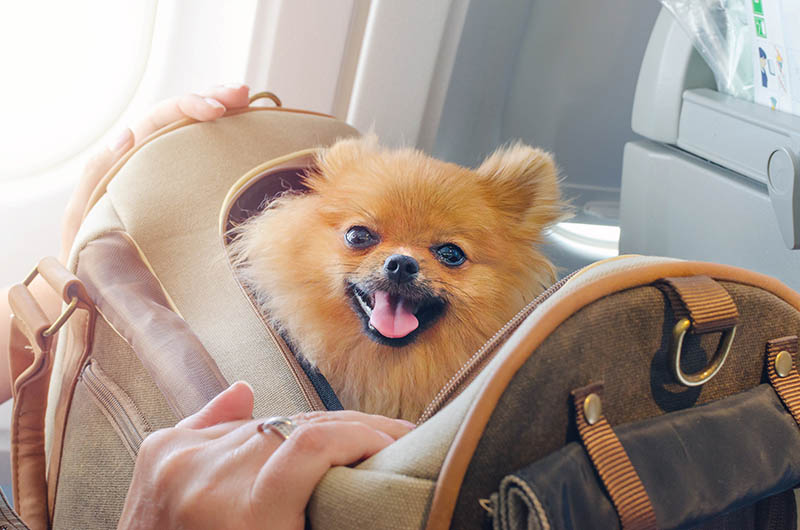
You’ll need to book in advance to ensure your pet gets a seat. Because your pet will be riding in the kennel the whole trip, it’s vital that they’re comfortable in the kennel. The day you fly is not the first time your pet should be in the kennel. Don’t give your pet a sedative in an attempt to keep them calm and quiet. Sedatives can be dangerous, especially when you’re on a plane without veterinary help.
Be sure to have all of your pet’s records on hand. You never know when someone will request them. Having multiple copies is recommended.
Service Animals
Typically, service animals operate under different rules than pets. Even larger dogs usually get to ride in the cabin, as their skills may be needed to help with your disability. Most dogs are trained to handle air travel when undergoing service dog training.
To get your service dog on a flight, you usually have to register the animal with the airline. Sometimes, you’ll have to submit proof that your dog is a service animal and has received some training. If your animal is large, you may have to purchase an additional seat for your dog. You can speak with the specific airline about possible ticket requirements for larger service animals.
Conclusion
Airlines have become much stricter in the past few years when it comes to flying pets. While dogs and cats were once welcomed to fly in the cargo area of most planes, this policy is now much rarer. Many airlines only allow pets if they are small enough to fit in the cabin underneath a seat. Very few still allow large dogs onboard, largely due to the risk of the animal.
Many types of dog breeds are banned, too. For instance, short-nosed breeds are often not allowed, as they are more prone to heat stroke and breathing problems.
Featured Image Credit: Monika Wisniewska, Shutterstock